
Skip navigation

Publications

Review Three Decades Of Soil N2O Research—Insights And Gaps

Published: August 2026
Title: Three Decades of Soil N2O Research — Insights and Gaps

In a new invited review, Klaus Butterbach-Bahl, Diego Abalos, and João Serra — who are all part of SmartField  — collaborate with international experts Laurent Philippot, Whendee L. Silver, and Stephen Ogle to synthesize 30 years of global research on agricultural soil nitrous oxide N2O emissions.


- While the last three decades have greatly advanced our understanding of  production, microbial pathways and biogeochemical modeling, significant gaps remain in scaling measurements and implementing robust mitigation practices. This synthesis directly reflects SmartField’s mission to connect mechanistic field science with national-scale greenhouse gas inventories and tangible mitigation strategies for agriculture, Klaus Butterbach-Bahl explains.


The review covers topics such as:

  • Advances in measurement technologies from manual chambers to laser spectroscopy, micrometeorology and real-time isotopic analysis
  • Understanding temporal “hot moments” (e.g., freeze–thaw and rewetting events) and spatial “hotspots” in agricultural landscapes
  • Insights into microbial ecology, truncated pathways and the role of novel N2O sinks (such as nosZ clade II organisms)
  • Biological mitigation avenues, including biological nitrification inhibitors (BNIs) and targeted inoculants
  • Evolution of process-based models and the transition toward IPCC Tier 3 national inventory reporting
  • Next-generation modeling integrating data assimilation, model ensembles and artificial intelligence/machine learning


The review is published in Global Change Biology.
 

Thumbnail Smartfield Ploughingandsowing 2.23.1

Published: 2026
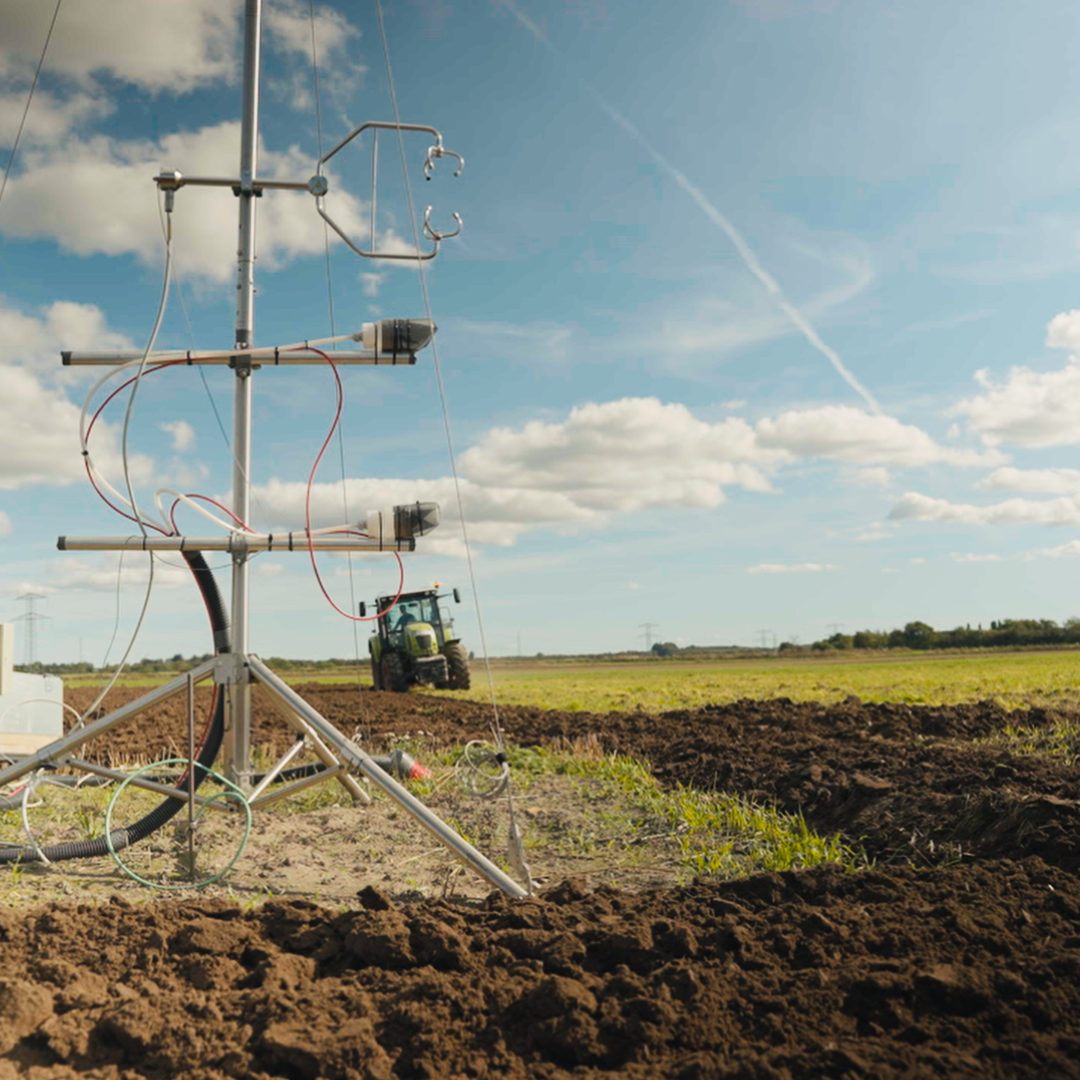
Title: Tractor-induced soil compaction drives nitrous oxide emissions

The publication is published in Soil and Tillage Research and in it you can read:

  • Machinery traffic increased cumulative N₂O emissions approximately 4.8-fold in wheel-compacted areas.
  • Micro-CT imaging revealed substantial deterioration of topsoil macropore architecture following repeated traffic.
  • Accounting for wheel-track emissions increased field-scale N₂O estimates by approximately 36%.
  • Traffic-induced spatial heterogeneity should be considered to improve field-scale N₂O budget estimation.


Smartfield 2

Published: 30 April 2026
Title: “Nitrogen science for sustainable food systems and climate change mitigation

In an editorial, Diego Abalos, Klaus Butterbach-Bahl and Jørgen Eivind Olesen — who are all part of SmartField — bring together insights from 13 studies examining nitrogen across multiple perspectives and scales, from field processes to national budgets and global assessments.


- Together, the studies show that improving nitrogen management requires better measurements, stronger models, more robust inventories and closer links between science and decision-making. This is closely aligned with the ambition of SmartField to improve monitoring, reporting and mitigation of agricultural N2O emissions, Diego Abalos explains.

The studies cover topics such as:

  • Agricultural nitrogen flows in Denmark and Sweden
  • National nitrogen budgets for Austria and Sweden
  • European nitrogen accounting methods
  • Groundwater denitrification in Denmark
  • Advances in modelling denitrification and N2O emissions

The editorial is published in Environmental Research Letters.

Smartfield Still

Published: 4 November 2025
Publication title: “From field measurements to national inventories and smart incentives — the SmartField approach for agricultural soil N₂O fluxes.”

The paper is published in Iopscience and in it you can read: 

  • SmartField is pioneering a field-to-national approach to reduce agricultural N₂O emissions by 20–30% by 2030.
  • Holistic measurement: Supersites and mobile systems provide high-resolution data on N₂O, nitrogen, and carbon fluxes, capturing key emission events and hotspots.
  • Advanced modeling: Integrates IPCC factors, machine learning and biogeochemical models to accurately scale results and assess mitigation impacts.
  • Stakeholder engagement: Collaborates with farmers, policymakers and industry to develop practical solutions and robust emissions tracking.
  • Global impact: Sets a benchmark for N₂O emissions reduction and sustainable nitrogen management.